Helen McCormick

Helen McCormick is a Welsh ceramicist and art teacher based in Cullompton, Devon. Her hand-built ceramic vessels are deeply inspired by the ebb and flow of the ocean and the ever-changing coastline. Through traditional hand-building techniques, she explores the plasticity of the clay, embedding small samples of sand from specific locations to create texture, colour, and through firing - permanency. This process not only preserves the sand but also strengthens the vessel's connection to the landscape from which it originates.
Each piece begins as a simple pinch pot and is gradually coiled over several days, allowing time for reflection before the next coil is added. Once leather-hard, the form is carefully refined by carving away excess clay by hand, using a mirror and turntable to achieve a symmetrical, tactile finish.
The surfaces of her vessels are brought to life with custom glazes and slips, applied using a variety of techniques. Copper oxide is the primary colourant, but in response to ethical concerns surrounding mining, she has begun experimenting with making her own verdigris pigments from reclaimed copper piping. Her goal is to create a hue that harmonises with her existing glaze, evoking a dynamic interplay of blues and greens that mirrors the depth and movement of the ocean.
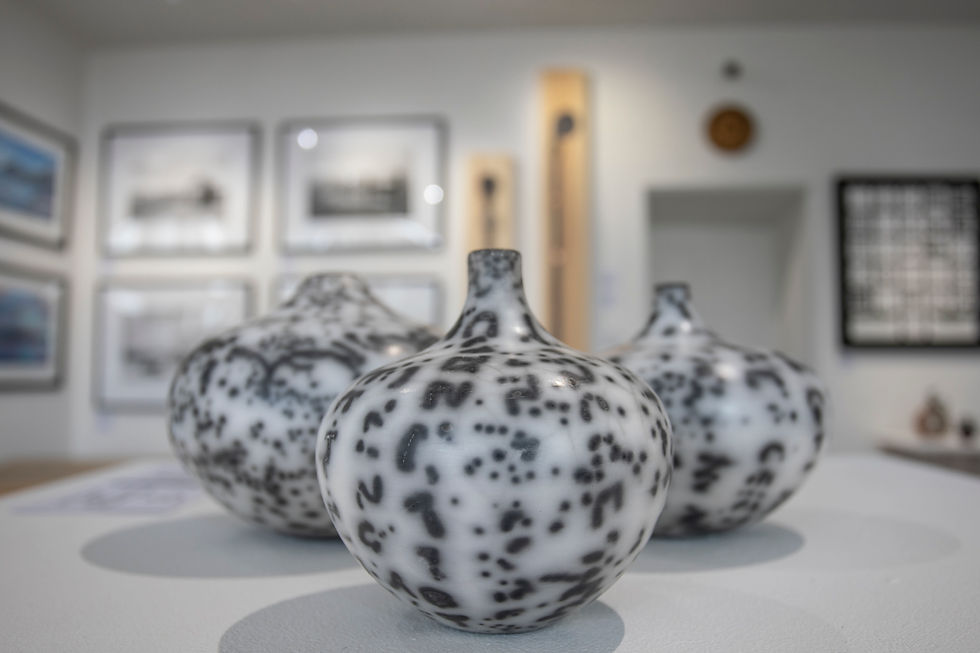
This collection of hand-built vessels have been shaped through the slow, meditative process of coiling, using stoneware and raku clay. Each piece responds to the ancient carved stones of North Wales: the St Cadfan Stone at Tywyn Church; the wall at St Tanwg’s Church; and the Llanaber Stone at St Mary & St Bodfan Church; where some of the earliest traces of Welsh language are etched into weathered surfaces.
The vessels embody the elements: air, fire, water, and earth. Air is captured through naked raku, where smoke traces ghostlike symbols onto smooth, burnished clay. Fire reveals itself in pit-fired forms, their carved surfaces scorched with flame and shadow. Water takes the form of large stoneware pieces, with sand collected from Benar Beach inserted into the clay and then glazed in a deep sea-blue matte glaze. Earth emerges in vessels inscribed with ancient patterns, featuring sand inclusions and glazed in tones that echo land and stone.
These vessels are quiet explorations of impermanence and legacy. Smoke, flame, and glaze build up on the surface like layers of memory. The clay holds memory, drawn from stone, marked by fire and time alike
Iaith Dros Fwg (Language through Smoke)
Inspired by the Cadfan Stone at St Cadfan Church, Tywyn and the decorative pattern on the wall at St Celynnins Old Church, Llangelynnin


Llais y Tân (Voice of the Fire)
Inspired by the Cadfan Stone at St Cadfan Church, Tywyn
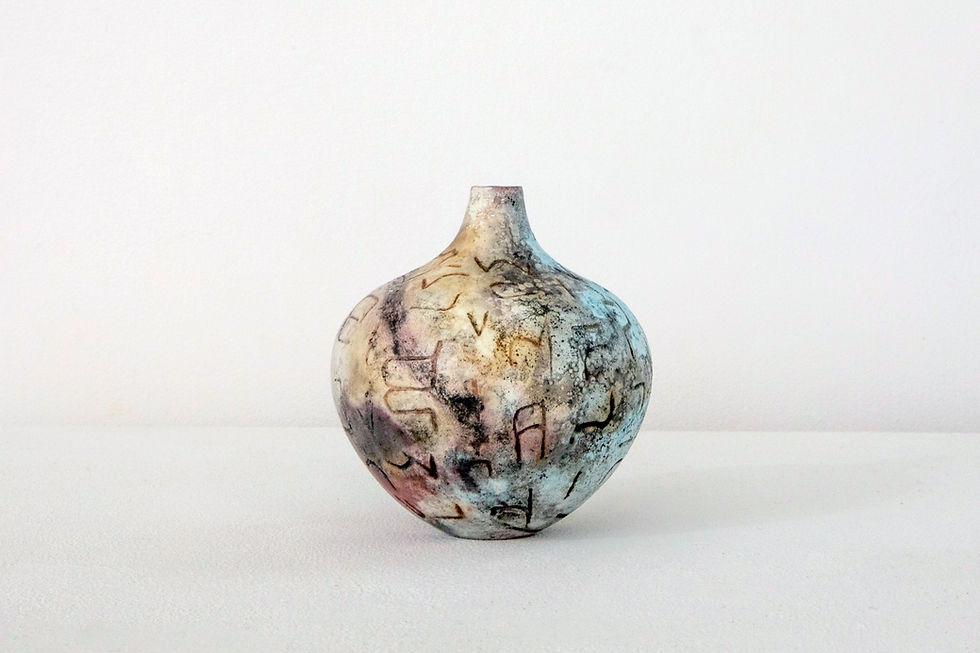


Môr a Cherrig (Sea and Stones)
Inspired by the surrounding coastline and the St Cadfan Stone at St Cadfan Church, Tywyn and the decorative pattern on the wall at St Celynnins Old Church, Llangelynnin


Olion Tir (Traces of Land)
Inspired by the surrounding coastal landscape around St Tanwg's Church and the St cadfan Stone at St Cadfan Church, Tywyn; inscriptions on the Llanaber stones at St Mary and St Bodfan Church, Llanaber


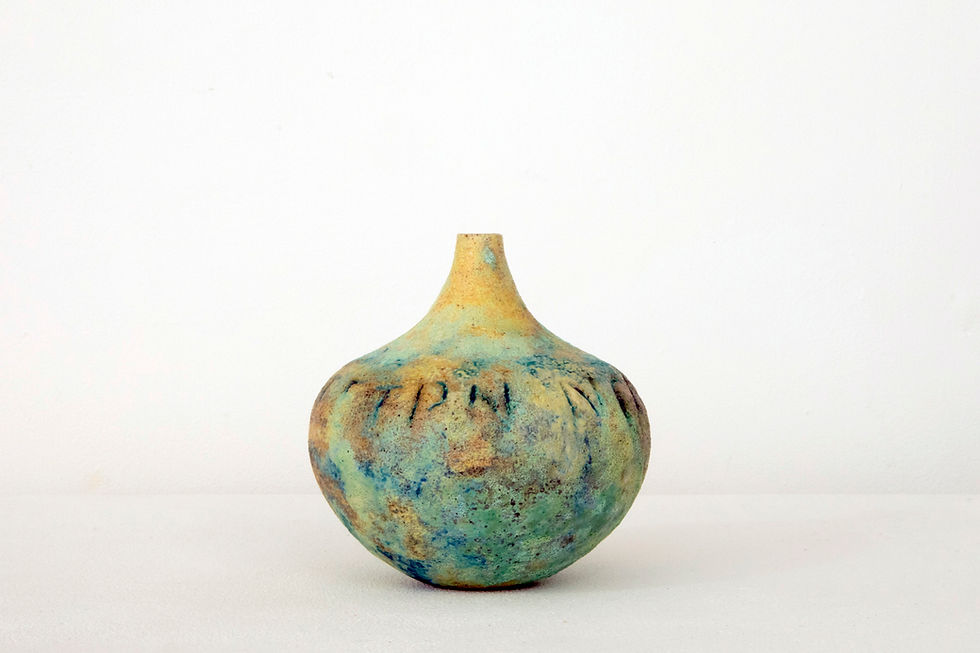

Nadolig Llawen
A collection of seasonal decorations inspired by the Llwybr Cadfan